






| Pro Pilot design features that
enhance flight safety.
Automatic 180 Degree Turn Designed to assist VFR pilots who might unexpectedly encounter poor weather or low visibility, the "auto 180" has been credited with saving lives. This feature was invented by Chuck Busch in 2003 and originally incorporated into the EZ Pilot autopilot. Reports from our customers indicate that it has been put to good use many times. Other autopilots are beginning to emulate this feature.
It is important to note that the autopilot does not have to be engaged to utilize the "Auto 180" feature. If a pilot encounters bad weather (and perhaps becomes disoriented) while manually flying the aircraft, invoking the feature will cause the autopilot to check the course over the ground, turn on the servo, level the wings, and execute the 180 degree turn. In the Pro Pilot, it will also engage the Altitude Hold to maintain the current altitude. Min/Max Airspeed Limiting An internal airspeed sensor (connected to the pitot system) monitors preset airspeed limits (set by the pilot) to prevent the system from stalling or over-speeding the aircraft. Example: If the pilot enters a very high climb rate, as the airplane reaches the minimum airspeed the autopilot will lower the nose of the aircraft and continue the climb at that airspeed, rather than the commanded vertical rate. In the same manner, during a descent, if the airspeed reaches the maximum limit that has been preset by the pilot the nose will rise and the descent will continue at the maximum airspeed instead of the selected vertical rate. Selectable Track Offset Position (TOP)
Automatic Servo Disconnect on Takeoff As a safety feature, during takeoff roll, the Pro Pilot checks the status of the servo. If the servo has inadvertently been turned on prior to takeoff, at 25 knots GPS groundspeed it will automatically disconnect the servo, allowing free movement of the ailerons. This is a backup feature only and should not be relied upon to replace a necessary preflight checklist item. This feature relies on a proper GPS signal being received and will not function properly if the GPS is not active and providing data to the autopilot. GPS groundspeed is used instead of pitot airspeed because airspeed sensors are not very accurate at the bottom end of the range. Gold Standard Servos
|
 To
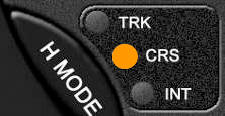
invoke the "Auto 180", the pilot simply presses the H
NAV
button and holds it in for 3 seconds. After 3 second
To
invoke the "Auto 180", the pilot simply presses the H
NAV
button and holds it in for 3 seconds. After 3 second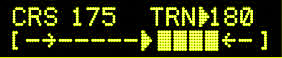 s the
aircraft will initiate a 180 degree turn. This will cause it
to turn to the left. Alternatively, It can be instructed to turn
right
by pressing and holding the V NAV button for 3 seconds.
s the
aircraft will initiate a 180 degree turn. This will cause it
to turn to the left. Alternatively, It can be instructed to turn
right
by pressing and holding the V NAV button for 3 seconds.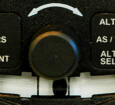
 If
you are on a flight plan using published airways, you may expect to
encounter other airplanes using the same airway. While this
usually occurs during climb or descent (you or the opposing
aircraft) it is a potential safety issue. As more aircraft are
using precision GPS receivers to navigate, and many are coupled to
autopilots, such close encounters are likely to increase. For this
reason, the Pro Pilot incorporates a Track Offset Position (TOP)
feature that allows the pilot to select a track offset of up to 3
nautical miles when in the Track (TRK) mode. This places the
aircraft away from the course centerline where much of the traffic
might be found. It might be noted that if all aircraft positioned
themselves to the right of the published course centerline (for
instance), opposing traffic would always be on the opposite side of
the centerline.
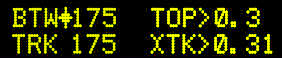
If
you are on a flight plan using published airways, you may expect to
encounter other airplanes using the same airway. While this
usually occurs during climb or descent (you or the opposing
aircraft) it is a potential safety issue. As more aircraft are
using precision GPS receivers to navigate, and many are coupled to
autopilots, such close encounters are likely to increase. For this
reason, the Pro Pilot incorporates a Track Offset Position (TOP)
feature that allows the pilot to select a track offset of up to 3
nautical miles when in the Track (TRK) mode. This places the
aircraft away from the course centerline where much of the traffic
might be found. It might be noted that if all aircraft positioned
themselves to the right of the published course centerline (for
instance), opposing traffic would always be on the opposite side of
the centerline. 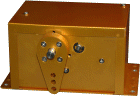 Trio's